
Grass, Concrete, and Brick Textures
9 months ago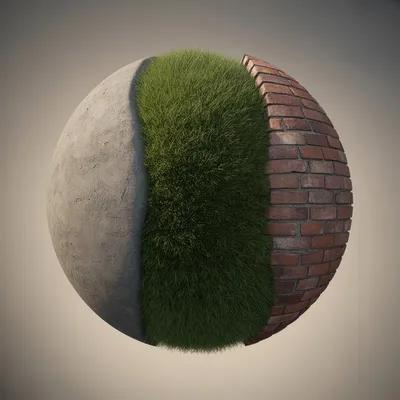
People still search for the same things.
Grass texture. Concrete texture. Brick texture.
That hasn’t really changed over the years, and it’s not going to change anytime soon. Engines get better, lighting gets smarter, tools get faster.But everything still sits on surfaces. And when a surface feels wrong, the whole scene feels wrong. You notice it instantly, even if you can’t explain why.
Grass is a good example. It looks simple until you actually try to use it. A weak grass texture shows repetition right away, reacts badly to light, or turns into that flat green carpet everyone recognizes. Good grass needs real variation, correct roughness values, and detail that works both up close and from a distance. Something you can use without hiding it behind fog or depth of field.
Concrete has the opposite problem. Too clean looks fake. Too damaged becomes unusable. A solid concrete texture lives in that narrow middle ground — subtle wear, slight surface breakup, nothing exaggerated. Concrete is everywhere in archviz and games, so lighting exposes mistakes immediately. If the roughness is off or the normal map is weak, it shows.
You’ll also notice that people care more about licensing than they used to. Not because it’s exciting, but because it affects real projects. Knowing whether a texture is actually safe to use matters, especially for commercial work. That’s why understanding what CC0 really means is just as important as choosing the right material.
Brick is mostly about scale. You can have a sharp texture and still get it wrong if the proportions feel off. A proper brick texture respects real-world dimensions, mortar depth, and natural color variation. Otherwise walls start to feel toy-like, even in high-end renders. This is why reference-based and scanned brick textures still matter — guessing proportions rarely works.

This is why texture libraries are still relevant. Not because artists don’t know how to make materials, but because starting from correct data saves time and prevents small mistakes that kill realism later. Surface issues are expensive to fix once lighting and composition are already in place.
ShareTextures exists for that reason. Neutral, physically correct textures that don’t fight your scene. You drop them in, they behave as expected, and you move on. No gimmicks, no overprocessed looks, just assets meant to be used.
That’s also why these keywords keep their search volume. People aren’t chasing trends when they look for textures. They’re solving real problems.